Historic Landmark Roof Restoration: St. Paul Church Dallas
Restoring the roof of a landmark 1910 Gothic Revival church in Dallas's Downtown Historic District isn't your typical commercial roofing project. It's where architectural heritage meets modern waterproofing demands.
Category
Worship Buildings
Location
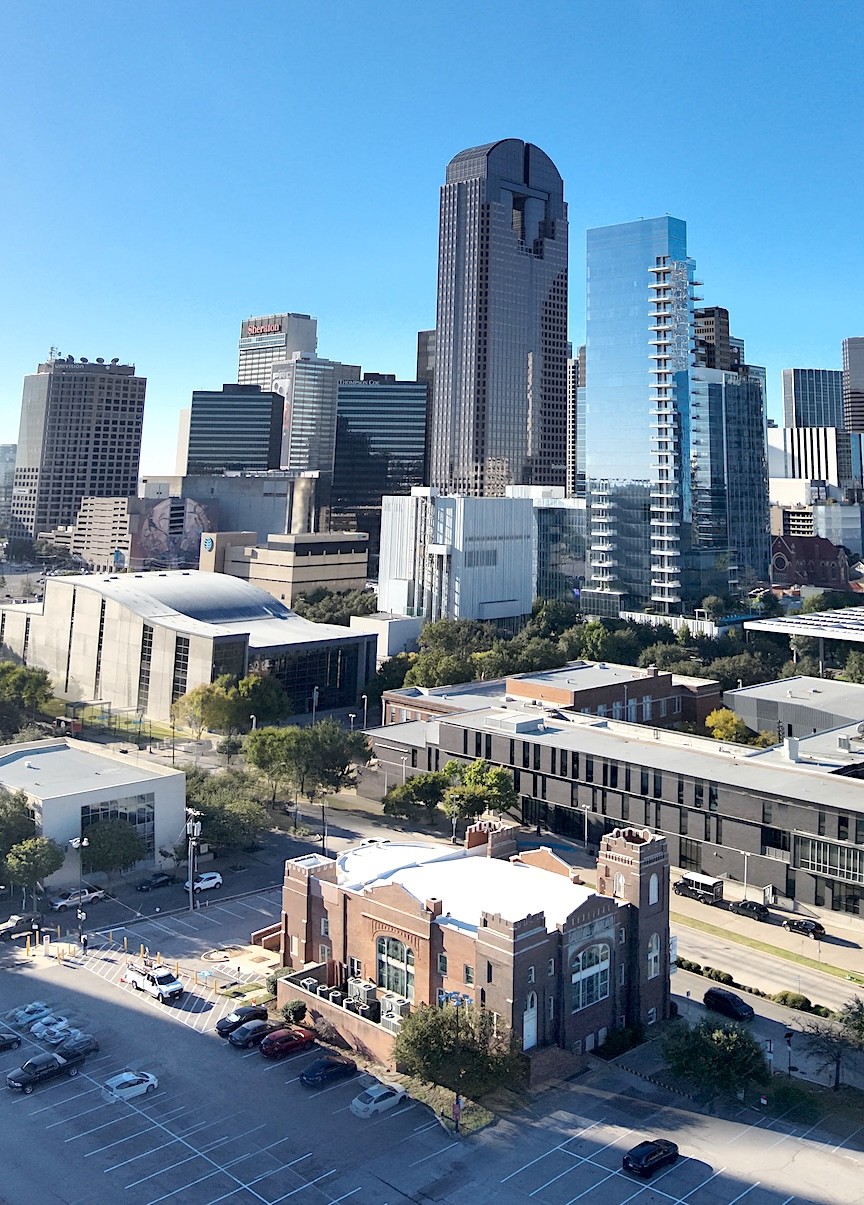
Dallas Historic District
When History Meets the Roofline
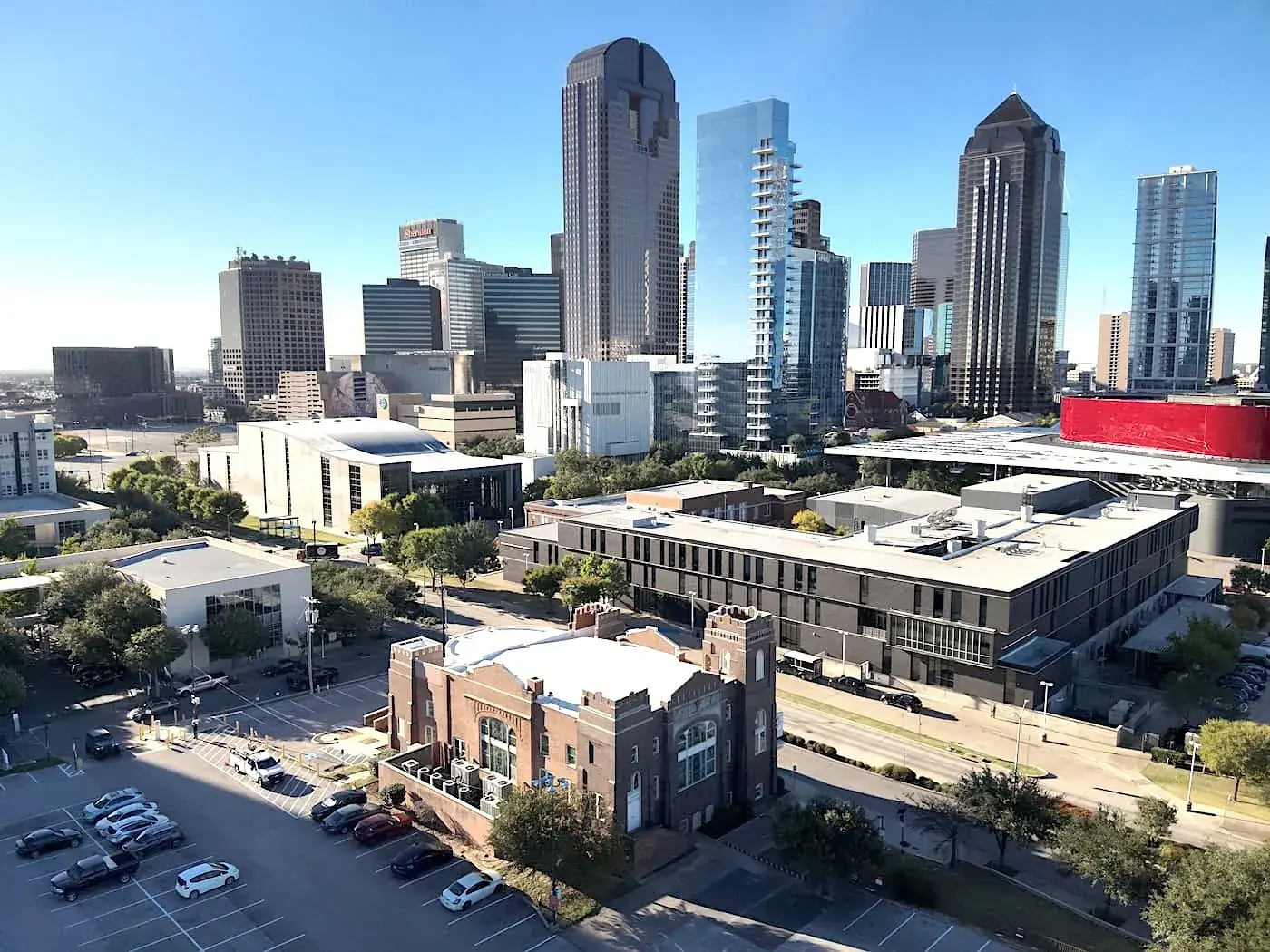
Not every roofing project starts with permission slips from four different historical commissions. But then again, not every building has bricks brought as offerings by parishioners in 1910, each one representing a family's contribution to building their spiritual home.
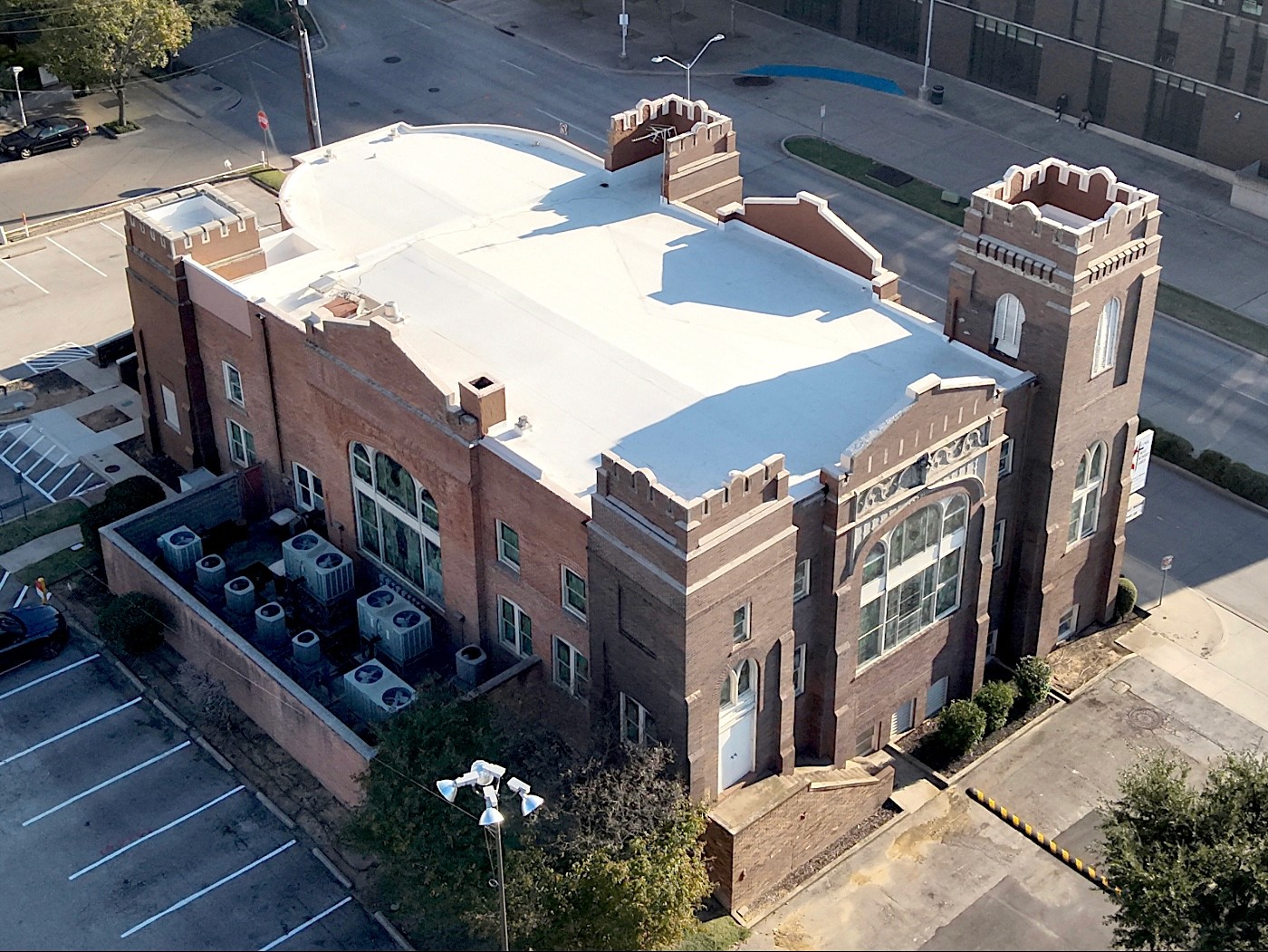
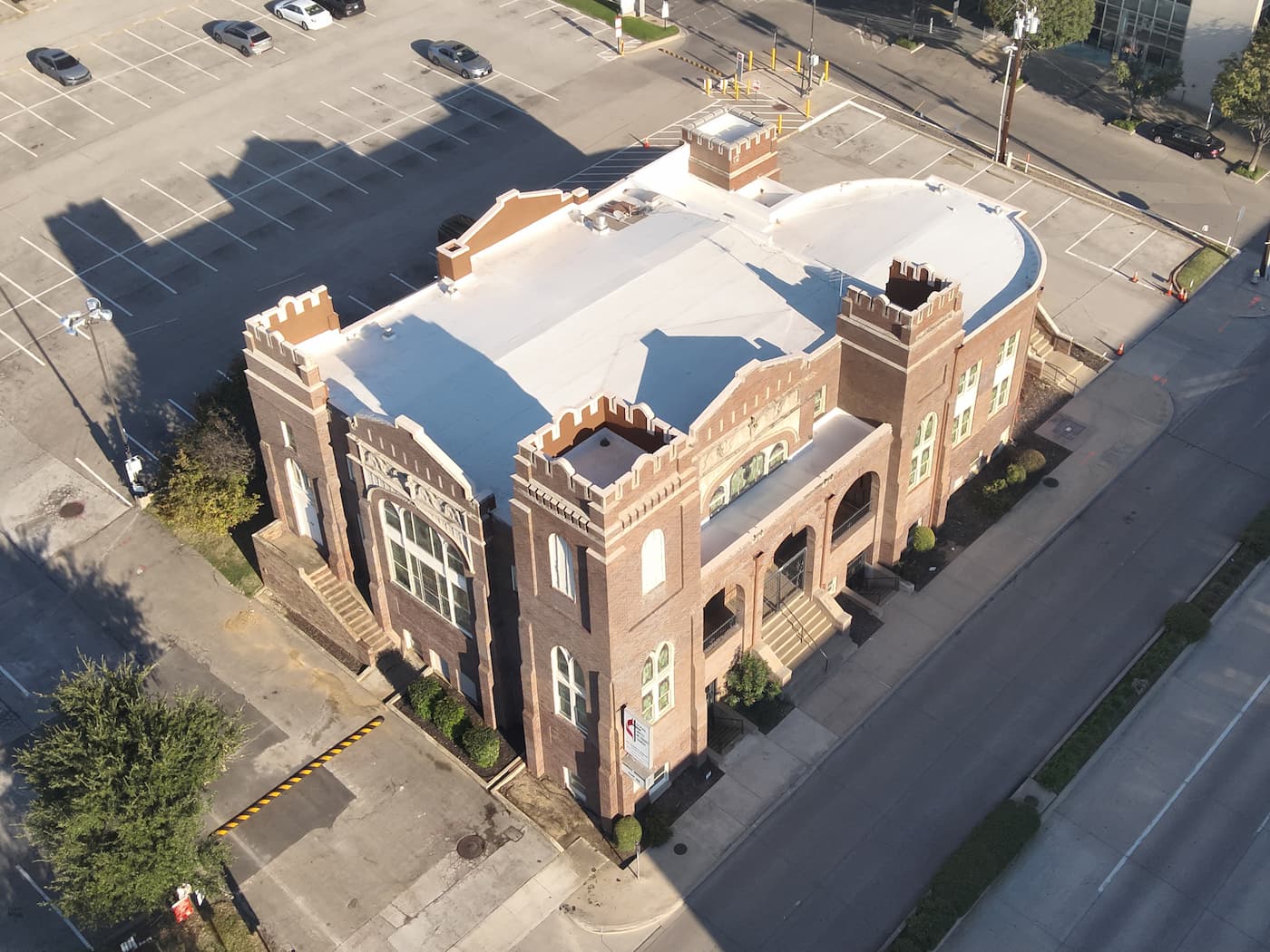
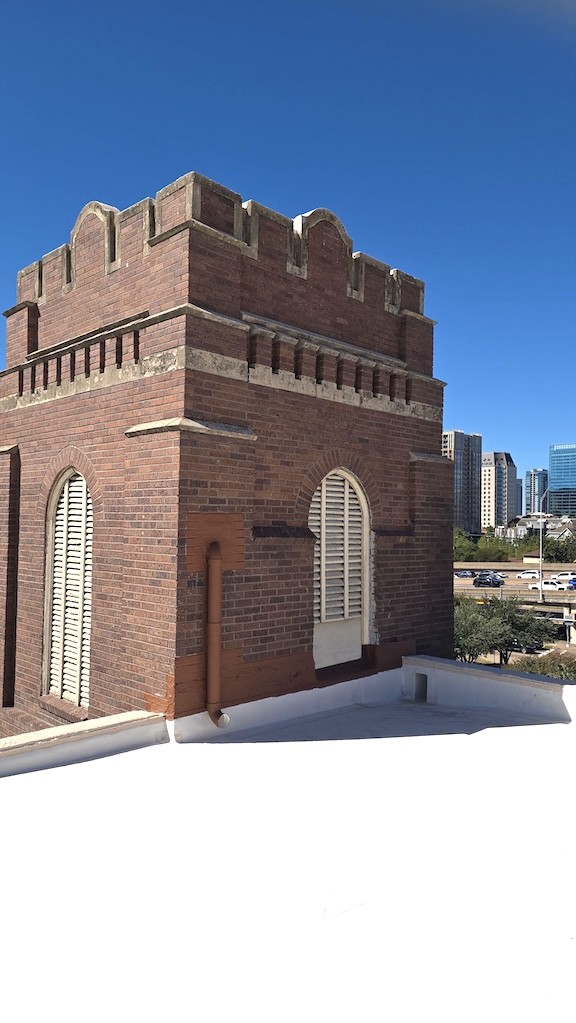
St. Paul United Methodist Church—a Gothic Revival landmark designed by William Sidney Pittman, Dallas's first African American architect—needed more than a new roof. It needed a roof restoration worthy of its 115-year legacy in the Freedman's Town North Dallas community.
 |  |
|---|
The Challenge: Balancing Preservation and Performance
Before our crew could break ground, we navigated approvals from the National Register of Historic Places, Texas Historical Commission, Dallas Landmark Commission, and United Methodist Registry of Historic Sites. The Certificate of Appropriateness alone required proving we could protect this architectural heritage while installing a modern commercial roof restoration system.
The stakes? Preserving one of Dallas's oldest African American churches while delivering the waterproofing performance a 6,400 square foot flat roof demands.
What We Discovered: 100+ Years of Roof History
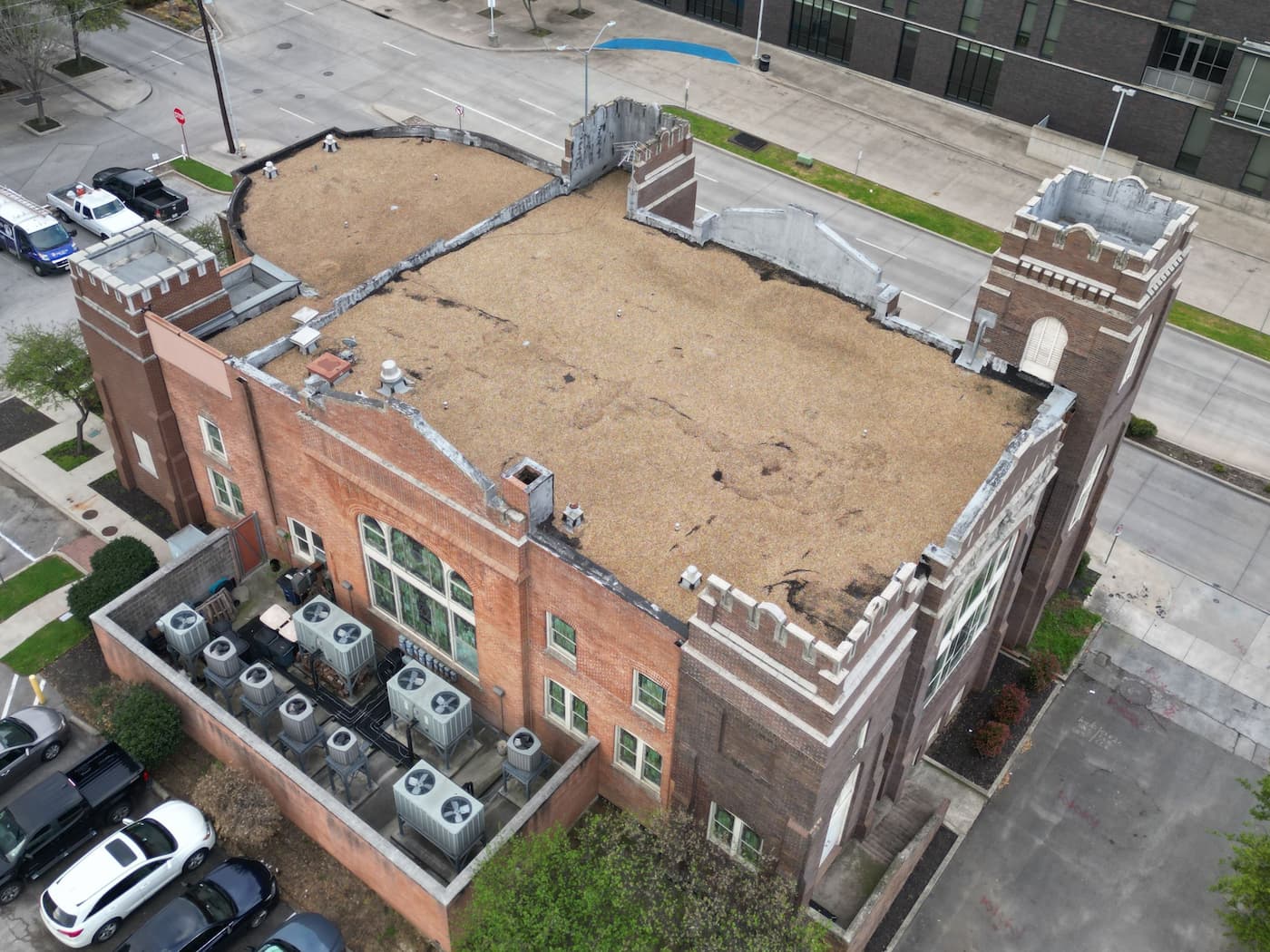
Stripping away multiple roof layers revealed the real story: original tongue-and-groove planking scarred by water intrusion and fire damage. Hidden beneath what we thought was asphalt-covered brick? Historic brick-pattern tin from the building's earliest days—deteriorated but documentable. We photographed everything in place and preserved the best sections for the church to display.
The existing collector heads and downspouts were beyond saving, but they became our blueprint. Using the 1910 originals as patterns, our metal fabrication team replicated period-accurate drainage components that honor the building's Gothic Revival character while meeting modern performance standards.
With these historic elements documented and preserved, we turned our attention to the structural foundation of the roof system itself.
Roof Decking Restoration
The original tongue and groove plank decking had sustained damage from both water intrusion and fire over the building's 100+ year history. Our roofing crew:
Identified all damaged sections of tongue and groove planking
Restored damaged areas to preserve as much original material as possible
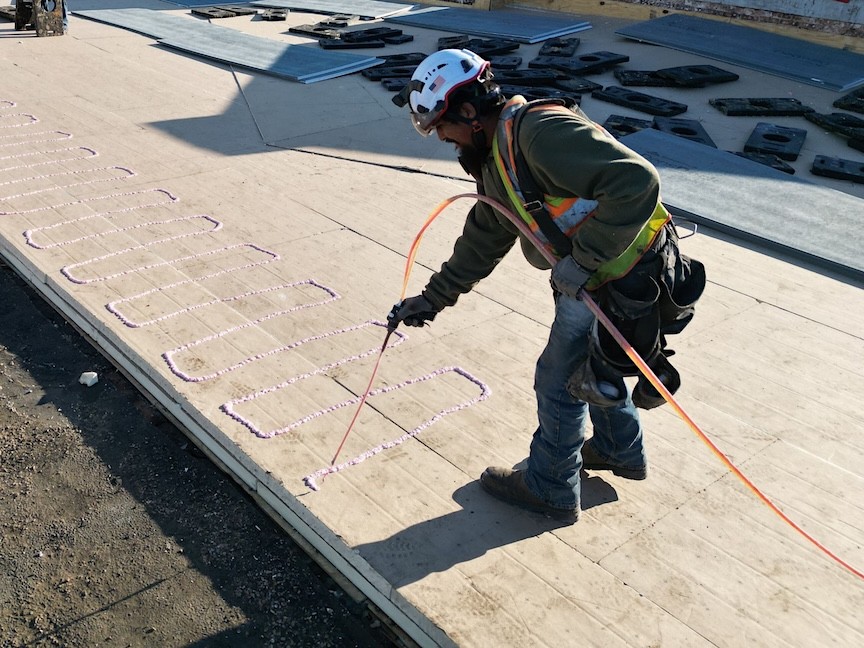
Installed an overlaid plywood deck fastened to the structural framing
Ensured the plywood overlay would serve as a stable base for the new roof assembly while preserving the original wood planks beneath
The TPO Roofing System: Modern Protection for a 1910 Landmark
With the historic structure stabilized and preserved, we installed a state-of-the-art commercial roofing system designed for decades of performance:
Insulation System: Tapered Poly-ISO insulation system installed with low rise foam for proper drainage
Underlayment Board: High-Density DensDeck underlayment board providing fire resistance and dimensional stability
Roofing Membrane: GAF TPO (Thermoplastic Polyolefin) roof assembly, adhered installation method
Roof Area: 6,400 square feet of commercial church roofing
Drainage System: Custom-fabricated collector heads and downspouts
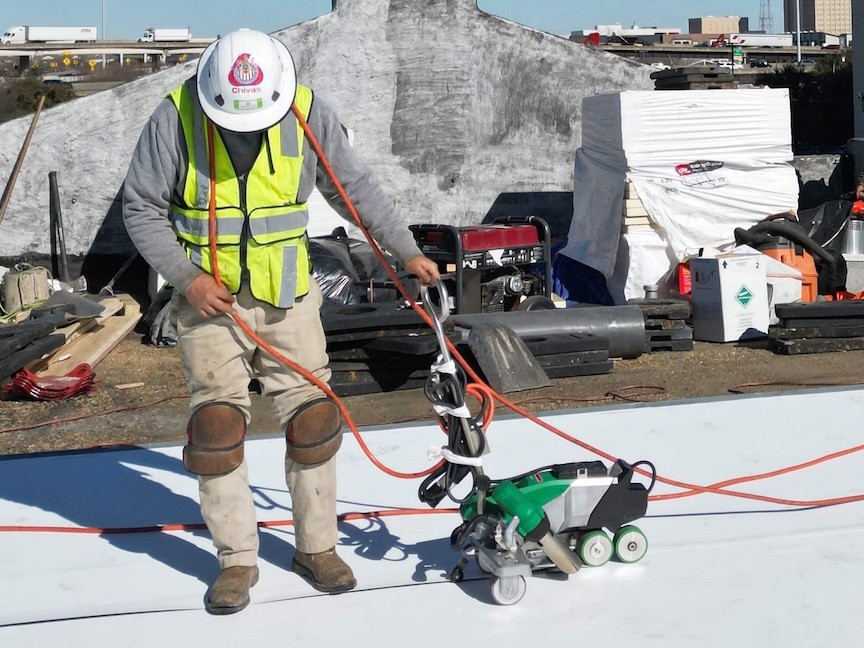
The result? A commercial church roofing system that will protect this landmark for decades, all while respecting the architectural details that earned it four different historic designations.
What This Project Required: More Than Standard Commercial Roofing
Religious organizations face unique pressures: limited budgets, preservation requirements, worship services that can't stop, and the weight of maintaining a community landmark. The St. Paul project required technical roofing expertise, yes—but also regulatory navigation, custom metalwork, and the kind of care you bring when 115 years of community history is riding on your work.
This is roof restoration Dallas churches trust when the building matters as much as the roof.
Roof Restoration Results: Protecting Dallas Heritage
The completed St. Paul United Methodist Church roof restoration achieves multiple critical objectives:
Weather Protection: Modern TPO roofing system protects the building from Dallas weather conditions
Historic Preservation: Original architectural character maintained through careful restoration and custom metalwork
Long-Term Value: Durable commercial roofing system designed for decades of reliable performance
Community Benefit: Protected gathering space for St. Paul congregation and Freedman's Town community
Heritage Conservation: Preserved significant example of William Sidney Pittman's architectural work and African American Dallas history
This project exemplifies Arrington Roofing's capabilities in complex historic preservation roofing work, demonstrating our ability to navigate regulatory requirements, execute technically sophisticated commercial roofing installations, and deliver craftsmanship worthy of Dallas's architectural heritage.
Ready to discuss your commercial roofing or historic building project? Contact Arrington Roofing to talk about what's possible when expertise meets respect for heritage.
Common Questions About Historic Roof Restoration in Dallas
How long does the approval process take for historic building roof restoration in Dallas?
Any work on an individually registered historic building structure or a building located in a designated historic district in Dallas requires an approved Certificate of Appropriateness from the Dallas Landmark Commission (DLC) before getting a building permit. Additionally, buildings can be registered with other agencies including the National Register of Historic Places (NRHP), Texas Historical Commission (THC), and various national independent groups such as the Register of United Methodist Historic Sites. A simple review process can be as quick as a couple of weeks, but a more complex project may take several months. So, on historic projects, it is critical that you select a roofer who has experience navigating this complex process.
What roofing systems work best for historic churches and commercial buildings in Dallas?
TPO roofing systems are ideal for historic flat-roof buildings in Dallas because they provide long-term durability, energy efficiency through reflective surfaces, UV and weather resistance, and low maintenance requirements—critical for churches with limited budgets. Modern TPO installations can meet historic preservation standards while protecting buildings for 20-30 years.
Can you preserve original materials during historic roof restoration?
Yes. Professional historic roof restoration involves assessing and preserving original structural elements like tongue-and-groove decking wherever possible. Damaged sections are repaired or reinforced with overlay systems that protect historic materials beneath. Any historic discoveries during tear-off (such as original tin work or architectural details) are documented, photographed, and preserved for the building owner when feasible.
Explore my recent web design creations and discover how we can transform your vision into reality.