Tired of Patching the Same Leak? How to Tell If Your Dallas Roof Is Still Worth Repairing
You have had the same leak looked at more than once. Someone sealed it, it held through a few storms, and then the first heavy Dallas rain brought the stain back to the same corner of the same ceiling. Now you are stuck between two uncomfortable thoughts: that you are throwing money at a roof that is finished, or that every roofer who walks up your driveway is going to tell you it is finished whether it is or not.
Why Does the Same Leak Keep Coming Back?
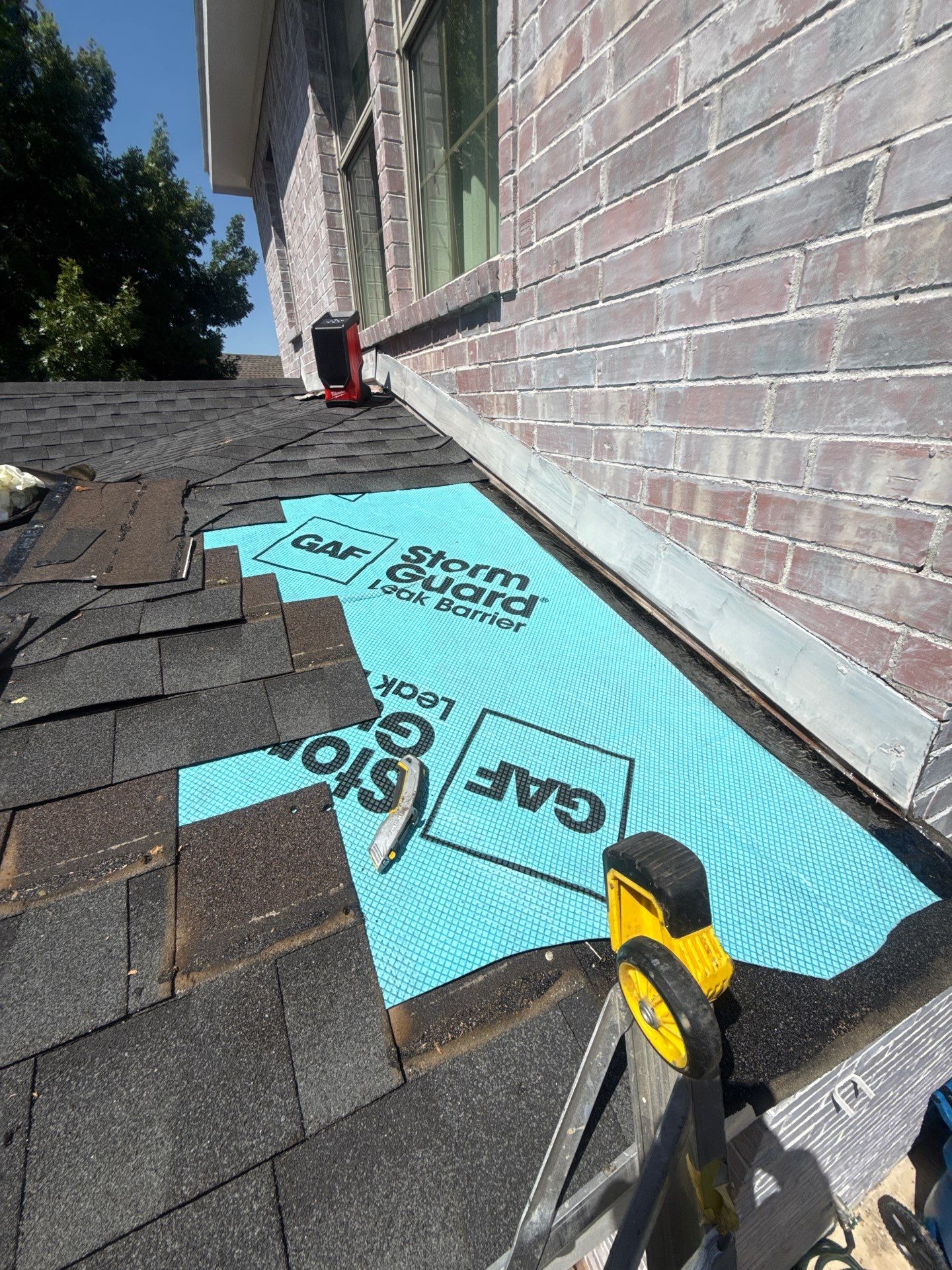
Almost every repeat leak we are called out to has the same explanation. The repair was made where the water appeared, not where the water got in.
Water travels before it shows itself
Water enters at a failure point, runs along the underside of the decking, follows a rafter, and drops through wherever the path happens to end. That can be several feet from the entry point and on a different part of the house entirely. Homeowners tell us the leak is "over the kitchen" or "in the sunroom," and it usually is not.
This is why a repair that targets the stain buys you a few months. Nothing about the entry point changed. The next sustained rain finds the same opening it found before.
Sealant is a bridge, not a repair
A bead of sealant over a gap will stop water for a while. Then a Dallas summer cycles it through months of surface heat, it goes brittle, and it lets go of whatever it was bonded to. If sealant was the entire repair, the flashing, boot, or transition detail underneath was never actually corrected. One of the more common versions of this is flashing at a chimney or wall that has pulled away and been caulked instead of reset.
None of that means your roof is done. It means the previous repair addressed a symptom. Those are different problems with very different price tags, and the repair work we do across Dallas is mostly the second kind: finding the detail everyone else sealed over.
How Do You Know You Are Not Being Sold a Roof You Do Not Need?
This is the question most homeowners are actually asking, and almost nobody asks it out loud. It deserves a direct answer rather than a promise about our values.
Texas does not license roofing contractors. There is no state board checking anyone's judgment, which means the burden of verification lands on you. The practical way to carry it is to make the recommendation defend itself.
Ask any roofer who recommends replacement to tell you what specifically rules out a repair, and to show it to you. A recommendation grounded in something real will point at particular conditions:
The decking has softened or delaminated, so there is nothing sound left to fasten new material to.
Shingles have gone brittle across multiple slopes and crack when they are lifted, which means any repair breaks more than it fixes.
Granule loss is widespread rather than isolated to one area, exposing the mat underneath.
There are failure points in several unrelated places, not one detail that failed.
A contractor who cannot name and show any of that is either guessing or selling.
Ask for the written findings and photographs before you hear a number. Our own certifications, including GAF Master Elite, are worth exactly as much as the evidence behind a given recommendation, and no more.
When Is Repair Still the Right Answer?
We say repair more often than homeowners expect, and it is worth publishing the conditions so you can hold us to them.
A roof is usually still worth repairing when the decking underneath is sound, the shingles still seal down and flex without cracking, the damage traces back to one identifiable point or one detail, and the surface has not lost granules broadly across the field. A twelve-year-old roof with a failed pipe boot and a stain in a hallway ceiling is a repair, not a replacement, and anyone telling you otherwise should be able to explain why.
Age alone does not decide it. We have replaced ten-year-old roofs that were installed badly from the first day, and repaired twenty-year-old roofs that were installed properly and ventilated well. Condition decides it. Age only shifts the odds.
When Does Patching Stop Making Sense?
The honest turning point is not a number of repairs. It is the moment the repairs stop being independent.
When three separate details have failed in three separate places within a couple of years, the roof is not suffering accidents any more. It is aging out, and each repair is buying a shorter interval than the one before it. At that point continuing to patch means paying repeatedly for time rather than once for a roof.
The second turning point is the decking. Once water has been getting in long enough to soften the wood beneath, a surface repair has nothing solid to attach to, and the cost of the fix starts climbing toward the cost of doing it properly. That is the case where waiting genuinely does cost more, and it is worth understanding how long a leak can travel before you ever see it.
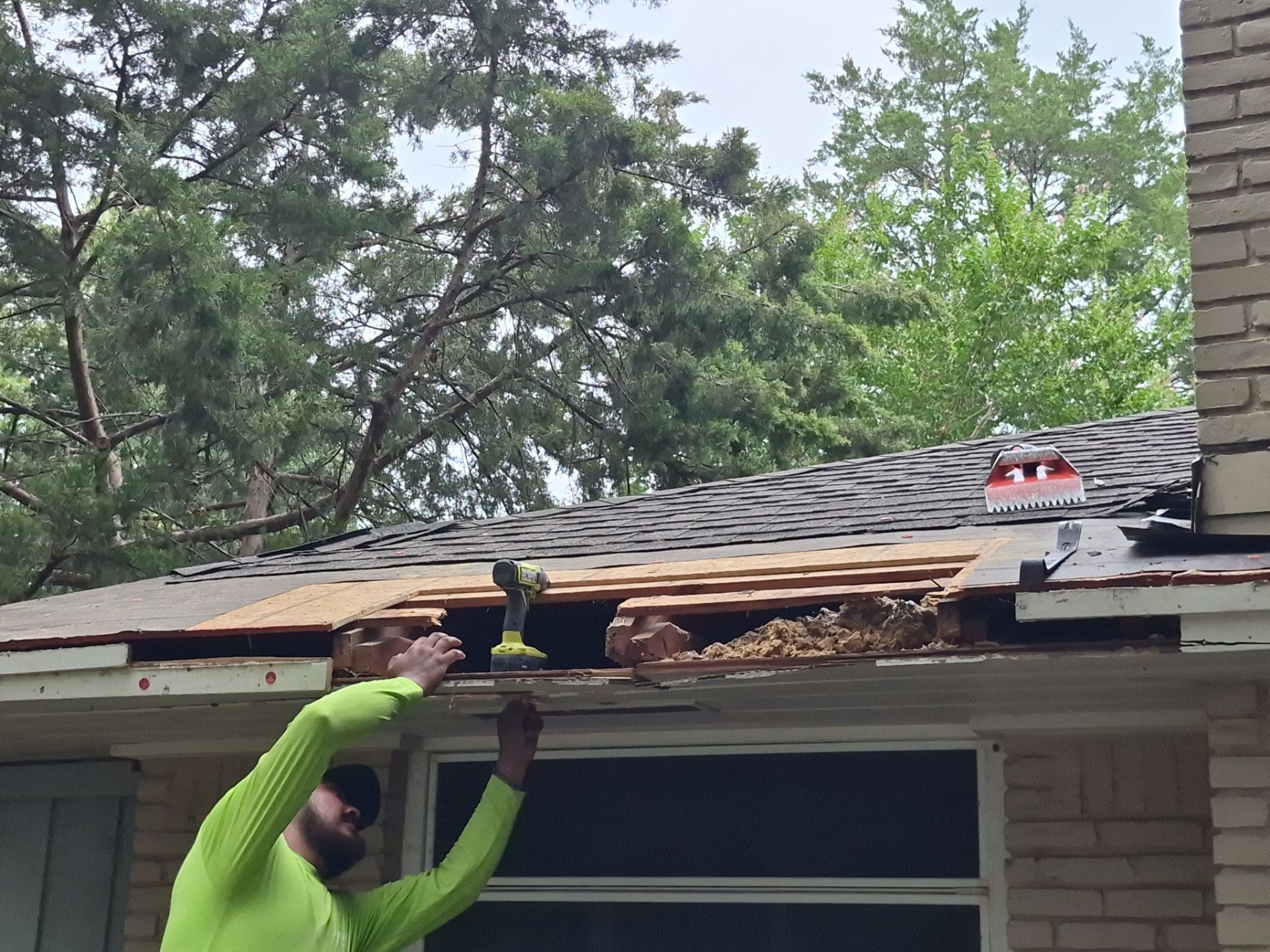
If you have reached either of those points, a full replacement is the conversation to have. If you have not, it is not.
What Should a Roofer Actually Do Before Recommending Either One?
A recommendation you can trust comes out of a process you can follow. Before anyone tells you to repair or replace, they should have done three things.
They should have been in the attic, not only on the roof. The underside of the decking shows the moisture path, the staining history, and the ventilation condition, none of which are visible from above.
They should have traced the leak back from where it shows to where it starts, rather than working from the stain.
And they should have looked at the whole roof rather than the one slope you pointed at, because the question is not only whether this leak can be fixed but whether the rest is about to do the same thing.
You should end up with written findings and photographs of what they saw. Not a number on a business card. If a roof genuinely needs replacing, the evidence exists and should be easy to hand you.
A note on flat and low-slope roofs. If the trouble is on a flat section, a rooftop deck, or a tar-and-gravel portion of a Dallas townhome or historic home, the decision runs on different rules. Membranes, drainage and coatings fail in their own ways, and we cover those on our flat roofing page.
Frequently Asked Questions About Repairing or Replacing a Roof in Dallas
How many times can the same roof leak be repaired before it needs replacing?
There is no fixed number. What matters is whether each repair addressed the actual source or only the place the water appeared. A leak repaired three times at the ceiling has been repaired zero times at the roof. Once the decking underneath has stayed wet long enough to soften, repair stops being the cheaper path.
Why did sealant fix my roof leak for a few months and then fail?
Sealant is a temporary bridge over a gap, not a replacement for flashing or a properly seated component. Dallas heat cycles it hard, it becomes brittle, and it separates from the surface it was bonded to. If sealant was the whole repair, the underlying detail was never corrected.
Can a roofer tell where a leak starts without tearing anything off?
Often yes. Water travels along decking and framing before it reaches a ceiling, so the stain rarely sits under the entry point. A roofer should inspect the attic side as well as the roof surface, and trace the path back rather than working from the stain.
Is a 15-year-old roof in Dallas too old to repair?
Not automatically. Age matters less than condition. A 15-year-old roof with sound decking, shingles that still seal, and one failed detail is a repair. A 15-year-old roof with brittle shingles across multiple slopes and widespread granule loss is usually near the end regardless of how few leaks it has.
How do I know a roofer is not recommending replacement just to sell a bigger job?
Ask what specifically rules out repair, and ask to see it. A contractor who cannot point to the decking condition, the state of the shingles, or the number of failure points is guessing or selling. Texas does not license roofing contractors, so verification falls to the homeowner: ask for the written findings and photographs before any recommendation.
Get a Straight Answer About Your Roof
If you have patched the same spot more than once, the useful next step is not another patch. It is finding out where the water is actually getting in and what condition the rest of the roof is in, so the decision is yours to make with the evidence in front of you.
Arrington Roofing has worked on Dallas roofs since 1983. Call (214) 698-8443 or schedule a free inspection, and you will get the findings whichever way they point.
By Chris Arrington, Founder and President, Arrington Roofing
GAF Master Elite and CertainTeed SELECT ShingleMaster certified roofing contractor serving Dallas-Fort Worth since 1983