Why Does a Roof Leak Feel Sudden? The Hidden Timeline Dallas Homeowners Should Know
A roof leak rarely announces itself. What shows up as a stain on your ceiling or a drip during a spring storm is usually the last stage of something that started weeks or months earlier — a small breach in the shingles or flashing that let water in long before anyone noticed. For Dallas homeowners, that gap matters. DFW's hail season runs heaviest from March through June, with late April and May typically producing the most damaging storms, and a single hailstrike in the spring can start a leak that doesn't show itself inside the house until well into summer. Understanding how a roof leak actually develops — not just what to do once you see the stain — is what lets a homeowner catch it while it's still a repair instead of a remodel.
If it's been a while since your roof was checked, a professional inspection can catch a developing leak before it reaches your ceiling. Schedule a free roof inspection or call (214) 698-8443.
Why Does a Roof Leak Take So Long to Show Up Inside Your Home?
Water doesn't drop straight down from wherever it enters. Once it works past the shingles, it tends to follow the path of least resistance — along the decking, down a rafter, or along a piece of flashing — before it ever reaches drywall. Along the way, it usually passes through attic insulation first. Insulation absorbs moisture and holds onto it, then dries out between rain events, which is part of why a stain can seem to appear out of nowhere: the same spot has likely been getting wet and drying out in cycles for weeks before enough residue builds up to become visible from below.
The Hidden Timeline Behind a Dallas Roof Leak
Every leak has a starting point, and most follow a similar pattern from there. The exact pace varies by roof, but the general sequence looks like this.
Phase One: The Point of Entry

Most leaks start small — a nail hole that has worked itself loose, a shingle lifted by wind, or granule loss and cracking from a hail impact that punched through the shingle's protective layer. In North Texas, this phase lines up closely with hail season: DFW typically sees its most active stretch from March through June, with late April into mid-May producing the highest concentration of damaging storms most years. A wind or storm event outside that window can start the same process at other times of year — wind-driven rain in particular can force water sideways and up under a shingle edge, not just straight down through it. From the ground, a cracked or bruised shingle rarely looks any different from an undamaged one, which is part of why this stage almost always goes unnoticed. Left alone, even a small opening tends to widen as water repeatedly moves through it with each new rain.
Phase Two: Moving Through the Attic, Unseen
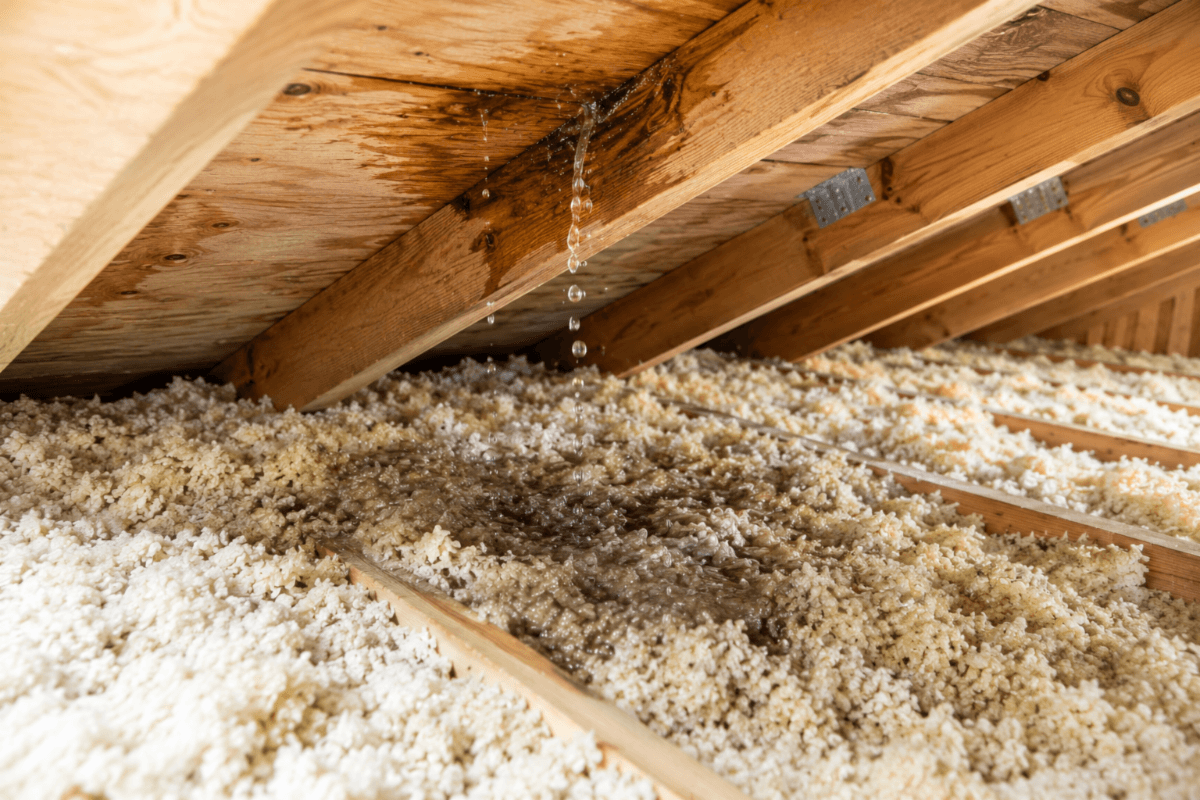
Once water is past the roofing surface, it typically drips into the attic and soaks into the nearest insulation. This can repeat many times — wet, then dry, then wet again — without ever reaching a point where it drips visibly into the living space below. This is the stage where an attic's ventilation plays a role: a well-ventilated attic dries out faster between events, while a poorly ventilated one holds moisture longer and gives the leak more time to spread before anyone notices. Repeated wet-dry cycles in the same spot are also what eventually affect the wood framing and decking underneath, which is why an inspection that catches a leak at this stage is usually a smaller job than one that catches it later.
Phase Three: The First Signs Appear
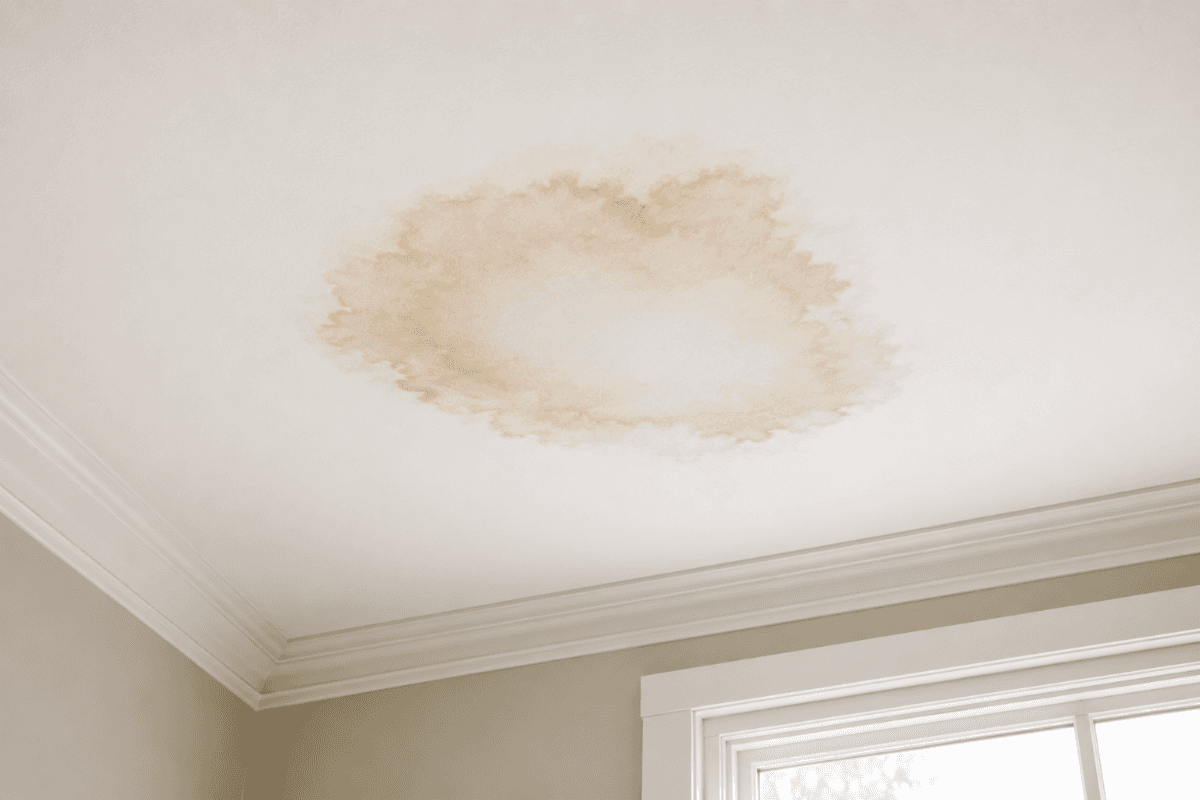
Eventually, moisture soaks through enough insulation and drywall that a faint discoloration becomes visible from inside the home. At first it's subtle — a slightly darker patch of ceiling, easy to mistake for shadow, dust, or humidity. Many homeowners notice it, assume it's cosmetic, and plan to repaint over it. Over repeated cycles, though, dirt carried by the water settles into the same spot and the mark becomes an actual stain rather than a passing discoloration, which is usually the point where it finally gets someone's attention.
Phase Four: The Leak Becomes Impossible to Miss

By the time a leak is dripping or the stain has spread and darkened, the underlying damage has typically been developing for a while. What feels like a sudden problem is almost always the visible tail end of a process that's been running quietly since the original entry point opened up. At this stage, the repair usually involves more than the single spot that's visible — the insulation, decking, and sometimes framing along the water's path need to be checked as well, which is why the scope of work at Phase Four is often larger than it would have been at Phase One or Two.
Why This Matters More for Older Dallas-Fort Worth Roofs
A roof's flashing, pipe boots, and nail seals age at a different rate than the shingles themselves, and they're usually the first components to fail as a roof approaches 15 years old — the same general age range where most Dallas homeowners start thinking seriously about eventual replacement. A roof in that range doesn't need a leak to justify a closer look. Small gaps around a chimney, skylight, or vent pipe are exactly the kind of entry point described in Phase One, and they're far easier to catch and reseal during a routine check than after they've already let water into the attic.
What Can You Check for Yourself Before It Reaches the Ceiling?
A homeowner can catch a lot of this earlier without ever getting on the roof. On a clear day, a flashlight and a look around the attic and the top-floor ceilings can surface warning signs long before a stain fully develops:
Insulation that looks matted, compressed, or discolored in one area rather than evenly fluffed throughout the attic
Insulation that feels damp to the touch, even if the surface looks dry
Dark staining or visible daylight coming through the roof deck when the attic light is off
A faint bubble or soft spot in ceiling drywall, even before any color change is visible
Hairline cracks where a ceiling meets a wall, or a door or window that has started sticking without an obvious reason
Flashing details around chimneys, skylights, and pipe penetrations, along with any close inspection of the shingle surface itself, are best left to someone trained to be on the roof safely and to know what they're looking at. Those are also the areas most likely to be the actual point of entry.
When Does a Slow Leak Turn Into a Bigger Problem?
A single stain from a contained leak is usually a straightforward repair. It's when the signs start showing up in more than one place — insulation compressed in several spots, staining on more than one section of decking, or more than one ceiling showing discoloration — that the damage has likely been active for longer and spread further than the visible stain suggests. At that point, a full assessment of the attic and roof surface matters more than patching the one spot that's visible from inside.
Frequently Asked Questions About Roof Leaks in Dallas-Fort Worth
How can I check my own attic for a hidden roof leak?
On a dry day, look at the underside of the roof deck and the insulation directly below it. Insulation that looks matted, discolored, or feels damp has likely had water sitting in it. Dark staining on the decking, or any spot where daylight is visible, are both signs worth having a professional look at.
Is a slow-developing roof leak covered by homeowners insurance in Texas?
It depends on the cause. Texas policies generally cover sudden, storm-related damage — a hailstrike that created the entry point, for example — but may treat damage from long-term wear differently. A documented inspection that identifies when and how the leak likely started is the piece a homeowner needs before filing a claim. Our roof repair team photographs and documents findings on every inspection for exactly this reason.
How often should a Dallas-Fort Worth roof be inspected to catch a leak like this early?
Twice a year is the general standard — once in spring before hail season ramps up, and once in fall — plus an additional check after any significant hail or wind event. Our spring roof maintenance checklist walks through what a homeowner can look at between professional visits.
What should I do if I already see a stain forming on my ceiling?
Treat it as a sign the leak has already reached Phase Three or later, not as a small cosmetic issue to paint over. Note roughly where the stain sits relative to the roofline above it, avoid pressing on any soft or bubbled drywall, and get a professional look at both the attic and the roof surface above that spot. Painting over the mark without addressing the source only hides it again until the next rain brings it back.
Texas doesn't require a state roofing license, which is part of why it's worth checking who is actually doing the inspecting — read more in our guide to why Texas doesn't require a roofing license and what that means for homeowners hiring an inspector. Arrington Roofing has been inspecting and repairing roofs across Dallas-Fort Worth since 1983, with GAF Master Elite and HAAG-certified inspectors on staff. If you want a professional set of eyes on your attic and roof before the next storm season, schedule a free inspection or call (214) 698-8443.