How Do Dallas Homeowners Pay for a New Roof? Insurance, Grants, Financing, and the Fine Print
Spring is North Texas hail season, and 2026 has already had its share — the late-April outbreak alone brought six straight days of severe storms and 226 reports of large hail across North and Central Texas, some of it baseball-sized near the metroplex. By the time the weather settles into summer, a familiar question lands on a lot of Dallas kitchen tables: the roof needs work, and how exactly are we going to pay for it? A new roof is one of the larger expenses a homeowner faces, and the good news is that paying for it is rarely a single decision. Between insurance, a federally funded grant program, contractor financing, and home equity, most Dallas homeowners have more paths than they realize. This guide walks through each one in plain language — including the part of "0% financing" that most roofers never explain.
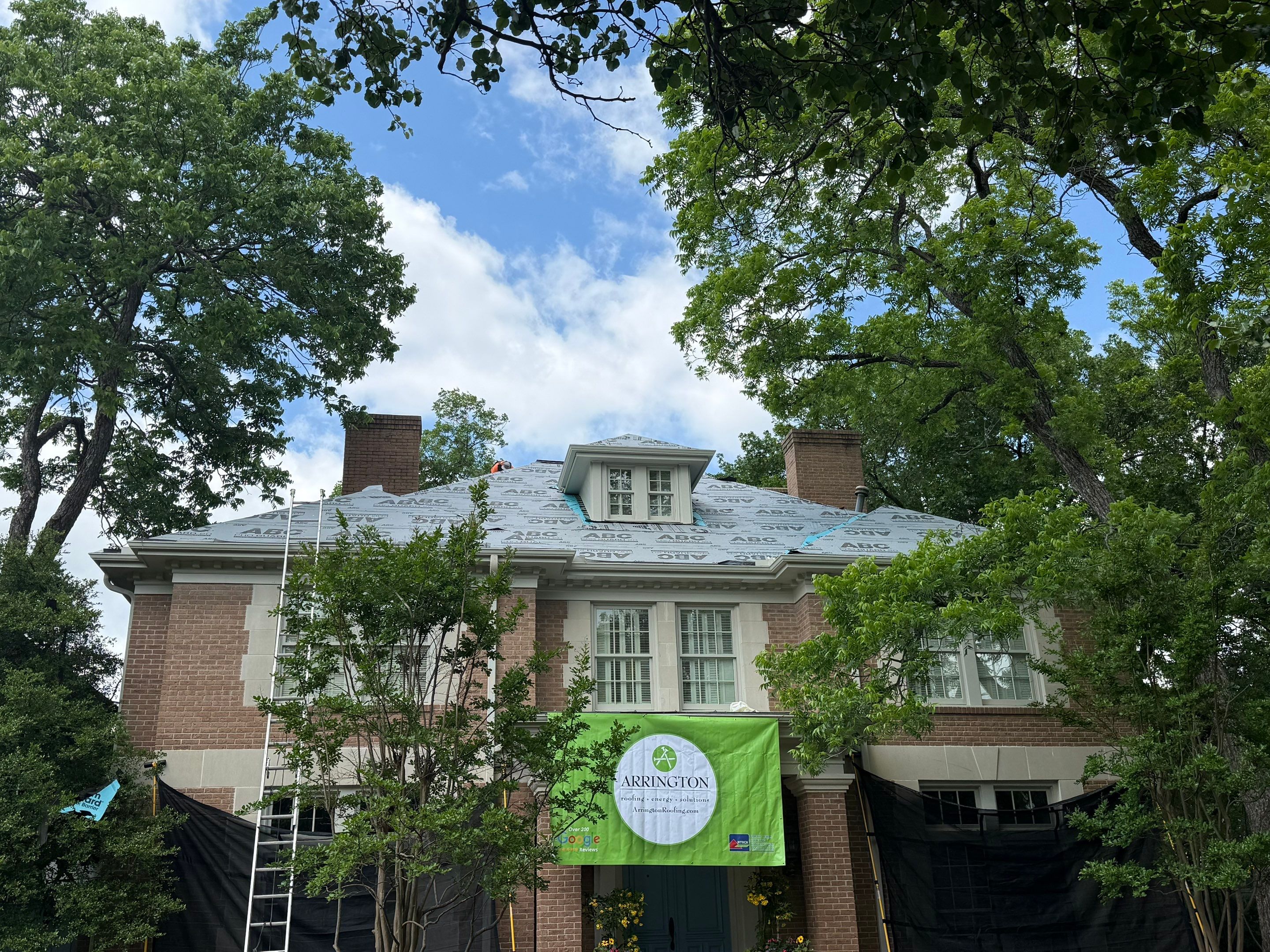
If you'd rather start with a number you can actually plan around, Arrington provides a free, no-obligation roof inspection and written estimate — request one here or call (214) 698-8443. We've been working on Dallas roofs since 1983, and the visit comes with no pressure to decide anything.
Why Doesn't Insurance Just Cover the Whole Roof in Texas?
For a storm-damaged roof, homeowner's insurance is usually the largest source of funding — but it rarely covers the entire bill, and understanding why is the first step to planning for the rest. The gap comes down to two things: your deductible and how your policy values the roof. Texas homeowners now carry some of the highest insurance costs in the country, averaging roughly $3,900 a year according to the Federal Reserve Bank of Dallas, and most policies here have shifted from a flat dollar deductible to a percentage-based wind-and-hail deductible. A one or two percent deductible is common, with three to five percent appearing on older roofs.
That percentage is calculated on your home's insured value, not the cost of the repair — which is where the surprise lives. A two percent wind-and-hail deductible on a home insured for $400,000 means you're responsible for the first $8,000 of storm damage before coverage begins. On top of that, whether your policy pays Replacement Cost Value or Actual Cash Value changes how much of the rest you actually receive, because an ACV policy holds back depreciation. We break those terms down fully in our guides to ACV, RCV, depreciation, and deductibles and the rise of premiums and deductibles for Texas homeowners — they're the place to go for the claim mechanics. For our purposes here, the takeaway is simple: even a fully approved claim usually leaves a real out-of-pocket number, and that number is what the rest of this guide is about.
How Much Does a New Roof Cost in Dallas, Texas?
Knowing the ballpark helps you size up which payment paths make sense. Drawing on third-party 2026 market data for the Dallas area — general market figures, not an Arrington quote — a standard asphalt shingle replacement on a typical 2,500-square-foot home runs in the range of roughly $9,600 to $15,000, and most single-family Dallas homes land somewhere between about $11,000 and $22,000 for a complete architectural shingle roof once size, pitch, and material are factored in. Premium materials such as standing-seam metal or synthetic slate sit well above that. Those figures move with the specifics of your home, which is why the only number worth budgeting against is a written estimate on your actual roof; we walk through what drives the price in our breakdown of the factors that affect roof replacement cost in Dallas-Fort Worth. Treat the ranges here as a planning tool, then get a measured estimate before you commit to any payment plan.
What Are Your Options for Paying for a New Roof?
There are four main ways Dallas homeowners fund a roof replacement, and they aren't mutually exclusive — many people combine them, using insurance for the bulk of a storm claim and financing to cover the deductible. Here's how each one works.
1. Homeowner's Insurance (for Storm Damage)
If hail or wind caused the damage, a covered insurance claim is almost always the best way to pay for a new roof — you're responsible for your deductible, and the policy covers the rest under the terms above. A professional inspection gives you a documented picture of the damage before you make any decisions. We cover what to do in the first days after a storm in why your first call after hail should be a roofer, not your insurance company. If your damage is hail-specific, our hail damage repair page covers how we document and stabilize it. Insurance only addresses storm damage, though — a roof that's simply worn out from age won't qualify, which is where the next three options come in.
2. The FORTIFIED Roof Grant (a Funded Option Most Roofers Don't Mention)
This is the option almost no Dallas roofing company puts in front of homeowners, and for some it's worth thousands. The Federal Home Loan Bank of Dallas runs a FORTIFIED Fund that awards grants of up to $17,000 per home to replace an existing roof with a FORTIFIED Roof — a storm-resistant building standard developed by the Insurance Institute for Business & Home Safety. For 2026 the program has $10 million allocated across two funding windows, with the second opening July 1, 2026, on a first-come, first-served basis until the money runs out.
There are real conditions attached, so it's worth understanding before you get your hopes up. The grant is income-qualified — generally available to households earning at or below 120% of the area median income — and you can't apply directly. Applications go through a participating FHLB Dallas member bank or credit union, paired with a certified FORTIFIED evaluator and roofer, and the finished roof has to earn an official FORTIFIED designation. The upside reaches past the grant itself: because a FORTIFIED roof is built to a higher standard, many Texas carriers offer a 10–35% discount on the wind-and-hail portion of your premium, and a peer-reviewed 2025 study found FORTIFIED homes had 73% fewer insurance claims and 72% lower losses than standard construction. If you think you might qualify, the move is to ask a participating lender about the current funding window — and we're glad to help you understand what a FORTIFIED-standard installation would involve on your home.
3. Contractor Financing ($0 Down, "0% Interest")
Most established Dallas roofers, Arrington included, offer financing through lending partners, and it's the most common way homeowners cover what insurance doesn't. The typical structure is attractive on its face: little or nothing down, promotional plans advertised at 0% interest for a fixed window such as 12 to 24 months, monthly payments that scale to the project, and longer fixed-rate installment loans for those who'd rather spread payments over several years. Approvals are often same-day and usually start with a soft credit check that doesn't affect your score. You can see the financing options Arrington works with on our Dallas roof financing page.
One piece of that deserves a closer look, because it's where homeowners get caught — and almost no roofer explains it. We've given it its own section below.
4. Home Equity, HELOCs, and Personal Loans
For a roof that's worn out rather than storm-damaged — or for a premium upgrade insurance won't fund — borrowing against your home is often the lowest-cost route. A home equity line of credit (HELOC) typically carries the lowest interest rate of any financing option, running in the range of 7–10% in 2026 for qualified borrowers, and because it's tied to a home improvement, the interest may be tax-deductible (your accountant is the right person to confirm that for your situation). This is frequently the path that makes sense for higher-end roof replacement projects — premium metal or synthetic systems where the cost runs well into five figures and you'd rather pay it down over five to fifteen years than burn through a short promotional financing window. Unsecured personal loans from a bank or credit union are a faster, no-collateral alternative for homeowners with strong credit, usually at higher rates than a HELOC.
The Fine Print on "0% Interest" That Nobody Explains
Here's the part worth slowing down for. The "0% interest" in most contractor financing is, more precisely, deferred interest — not the same thing as no interest. If you pay the balance in full before the promotional window closes, you genuinely pay zero interest, and it's an excellent deal. But if any balance remains when that window ends, the interest that was quietly accruing the whole time — often at an annual rate in the range of 18–26% — gets charged retroactively on the original amount, all at once. The plan that looked like a long, easy payment schedule becomes an expensive one the day after the promo ends.
The practical lesson isn't to avoid these plans — they're a smart tool used correctly. It's to treat a promotional 0% offer as a short-term loan with a hard deadline, not a relaxed long-term payment plan. If you're confident you can clear the balance inside the promotional window, it's one of the least expensive ways to pay. If you'll need several years, a fixed-rate installment loan or a HELOC will almost always cost you less than a deferred-interest plan you can't pay off in time. We'd rather you know that going in than learn it on a statement, which is exactly the conversation our team will have with you before you sign anything.
How Should You Choose the Right Way to Pay?
The right answer follows the situation. If your roof was damaged by hail or wind, start with an insurance claim — that's the largest source of funding, and a documented inspection is what supports it; financing the remaining deductible is a common and sensible follow-up. If your roof is simply aging out and you have equity, a HELOC usually gives you the lowest borrowing cost and the most flexible timeline. If you can comfortably clear a balance within a year or two, a promotional 0% contractor plan turns the expense into manageable payments at no interest. And if your household income qualifies, it's worth asking a participating lender about the FORTIFIED grant before you finalize anything, because that's money you don't pay back. Most homeowners end up combining two of these, and there's no single right answer — only the one that fits your roof, your timeline, and your finances. That's a conversation worth having out loud with a roofer who isn't rushing you toward the most profitable option for them.
How Arrington Helps Dallas Homeowners Pay for a Roof
Our role starts with an honest number. The free inspection and written estimate give you the actual scope and cost for your roof, which is the foundation every payment decision rests on — you can't plan around a guess. From there we document storm damage thoroughly in a written report, walk you through the financing options our lending partners offer without steering you toward the one that pays us most, and explain the trade-offs of each path in plain terms, deferred interest included. For more than forty years the goal has been the same: that the homeowners we work with understand what they're signing and why. When you're ready, you can review the financing options on our roof financing page or simply call and we'll talk it through.
Frequently Asked Questions About Paying for a Roof in Dallas
How much does a new roof cost in Dallas, Texas?
General third-party market figures for 2026 put a standard asphalt shingle replacement on a typical 2,500-square-foot Dallas home in the range of roughly $9,600 to $15,000, with most single-family homes between about $11,000 and $22,000 depending on size, pitch, and material — general market data, not an Arrington quote. The only accurate number is a written estimate on your actual roof; our guide to the factors that affect roof replacement cost breaks down what moves it.
Can I get a new roof in Dallas with no money down?
Often, yes. Most established Dallas roofing contractors offer financing with little or nothing down, including promotional plans at 0% interest for a set window and longer fixed-rate loans. Approval is frequently same-day and usually begins with a soft credit check. If your roof was storm-damaged, insurance typically covers the cost beyond your deductible, and that deductible itself can often be financed.
Does homeowner's insurance pay for a new roof in Texas?
For damage caused by a covered event such as hail or wind, yes — minus your deductible, and subject to whether your policy pays Replacement Cost Value or Actual Cash Value. A roof that has simply worn out from age is not a covered loss and won't qualify. Because Texas deductibles are usually a percentage of your home's insured value, the out-of-pocket portion can still be significant, which is why many homeowners pair insurance with financing.
What is the FORTIFIED roof grant and do I qualify?
It's a program from the Federal Home Loan Bank of Dallas that provides grants of up to $17,000 to replace a roof with a storm-resistant FORTIFIED Roof. It's income-qualified — generally for households at or below 120% of the area median income — and funded in limited windows on a first-come, first-served basis, with a 2026 window opening July 1. You apply through a participating member bank or credit union alongside a certified FORTIFIED evaluator and roofer, not directly. Ask a participating lender whether funds are currently available.
Is 0% roof financing really free?
Only if you pay the balance in full before the promotional period ends. Most "0% interest" roofing plans are deferred-interest offers: pay it off in time and you owe no interest, but if a balance remains when the window closes, accrued interest — often 18–26% annually — is charged retroactively on the original amount. Treat these plans as short-term loans with a firm deadline, and choose a fixed-rate loan or HELOC if you'll need several years to pay.
What credit score do I need to finance a roof?
It varies by lender and program. Many roofing financing partners work with a range of credit profiles, and some approve scores well below what people expect, though the interest rate and terms you're offered improve with a stronger score. A soft credit check at the start lets you see your options without affecting your score, so it's worth getting pre-qualified before assuming you won't qualify.
Should I use a HELOC or contractor financing for my roof?
It depends on your timeline. A HELOC usually carries a lower interest rate and suits larger projects you'll pay down over several years, with interest that may be tax-deductible. Promotional 0% contractor financing is the better deal only if you can clear the balance inside the promotional window. If you can't, a HELOC or a fixed-rate installment loan typically costs less than a deferred-interest plan that runs past its deadline.
However you decide to pay for it, the place to start is knowing what your roof actually needs and what it will cost. Request a free inspection and written estimate or call (214) 698-8443 — an honest number, a clear explanation of your options, and no pressure, from a Dallas team that's been doing this since 1983.