The Texas 25% Roof Rule and Insurance Deadlines Every Dallas Homeowner Should Know
By Arrington Roofing — Certified Dallas-Fort Worth roofing contractor serving North Texas since 1983
A hailstorm damages part of a roof slope, a contractor gets up there to scope repairs, and the estimate comes back larger than expected — not because anyone's padding the bill, but because Dallas's building code and Texas's insurance rules both have thresholds that change the math once storm damage crosses them. Two of the most common questions we get after a storm are whether a partial repair can legally stay partial, and how much time there actually is to file a claim. Both have real, specific answers. If you're facing either question on your own roof right now, our team is glad to walk through what your specific damage means before you commit to a repair scope or a claim filing.
What Is the Texas 25% Roof Rule, and Does It Apply in Dallas?
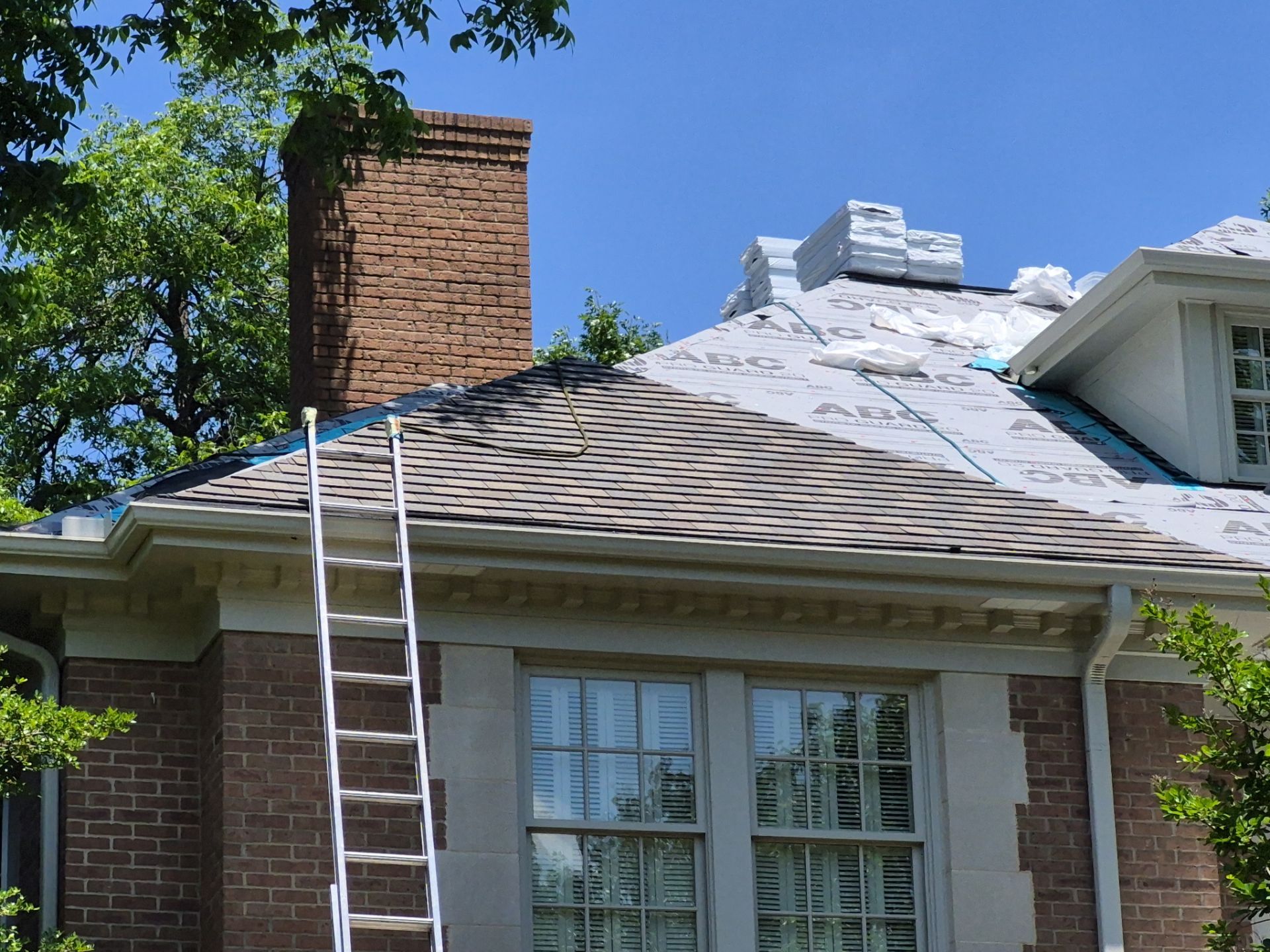
Dallas has adopted a version of the International Residential Code, and like most DFW cities, that code carries a provision often called the 25% rule: once 25% or more of a single roof slope is repaired or replaced within a 12-month period, the code generally requires bringing the entire slope up to current code rather than patching just the damaged section. The rule applies slope by slope, not to the roof as a whole, so a home with a damaged front slope and an undamaged back slope can sometimes have one slope replaced and the other left alone.
The exact interpretation isn't identical in every jurisdiction, since it depends on which code edition a city adopted and how the local building department applies it at permit time. That's worth confirming directly rather than assuming, which is one reason a contractor pulling your permit should walk you through the percentage on your specific roof before work starts, not after. A roof inspection that documents the damaged square footage against the total slope area is what turns this from a guess into an actual number.
Most residential roofs in Dallas have four or more distinct slopes, and the 25% threshold is calculated separately for each one rather than against the roof's total square footage. A home where hail concentrated on one side can end up needing a full slope replacement on that side while the opposite slope, with only scattered impact marks, stays in the repair category. This is also why two roofs that look similarly damaged from the ground can land on different sides of the threshold — the percentage depends on how the damage is distributed across each individual slope, not on the overall impression of the roof.
How Does the 25% Rule Affect an Insurance Claim?
The 25% rule is a building-code compliance question, not a guarantee that your insurer will pay for a full slope replacement just because the threshold is crossed. What it does is create a legal floor: if the code requires replacing the whole slope, that requirement exists independent of what an adjuster's initial scope says. In practice, this is where documentation becomes the deciding factor. An adjuster who sees a roof only from the ground, or who inspects before a contractor has mapped the damage percentage per slope, may scope a repair that doesn't reflect the code requirement.
This is the same reason it matters who inspects a roof first after a storm. A contractor who documents damage to insurance-grade standards, photographs each slope, and calculates the affected percentage gives an adjuster a complete picture to work from rather than a partial one. We've covered the sequencing question directly in why a professional roof inspection should be an early step after hail, and the underlying claim mechanics — replacement cost value versus actual cash value, and how deductibles apply — are covered in full in our guide to ACV, RCV, depreciation, and deductibles.
How Long Do You Have to File a Roof Insurance Claim in Texas?
This is where two different deadlines get confused, and the confusion can cost a homeowner a valid claim. Most Texas homeowner policies include their own filing requirement, commonly a clause requiring you to report damage and file "as soon as reasonably possible," and in practice that's often interpreted as within one year of the date of loss. That policy deadline is separate from Texas's general legal statute of limitations for breach of contract, which gives you two years to sue an insurer over a denied or underpaid claim. Having two years to file a lawsuit doesn't help if your policy's own one-year window to file the claim itself has already closed — those are two different clocks, and the shorter one is the one that actually matters day to day.
The practical takeaway is to read your own policy's notice-of-loss language rather than assume a single statewide number applies to every homeowner in Texas, since policy wording varies by carrier. If a storm has already damaged your roof and time has passed, the safest move is to document the damage and file promptly rather than wait for a more convenient moment, since the deadline doesn't pause for scheduling.
Filing promptly also means filing in writing, not just over the phone. A call to an insurer's claims line starts the process, but a dated email or an online claim submission is what creates a record you can point back to later if a dispute ever comes up about when you actually reported the damage. Keeping a copy of that notice, along with the date-stamped photos from your roof inspection, is what turns "we told them about it" into something you can actually prove.
What Happens After You File a Claim in Texas?
Once a claim is filed, Texas's Prompt Payment of Claims Act sets deadlines on the insurer's side, not just the homeowner's. An insurer generally has 15 days to acknowledge a claim after receiving written notice, 15 business days to accept or deny it once they've received everything they asked for, and 5 business days to issue payment after accepting. If the Texas Insurance Commissioner declares a weather-related catastrophe, which large North Texas hail outbreaks have qualified for, those deadlines are each extended by 15 calendar days rather than replaced with a different number. These deadlines exist because claims can otherwise drag for months with no consequence to the insurer, and Texas law does attach real financial consequences when an insurer misses them.
For hail, wind, and other storm-related claims specifically, a separate part of the Texas Insurance Code governs what happens if a stalled claim ends up in court. It requires a homeowner to give the insurer written notice at least 61 days before filing a lawsuit, spelling out what's owed, and it ties any court-ordered interest to a state formula that adjusts periodically rather than one fixed percentage. That's a meaningfully different process than a general property dispute, and it's specific enough that a claim reaching this stage is worth discussing with an attorney rather than relying on a single number found online.
None of this replaces a homeowner's own record-keeping. Tracking the date a claim was filed, when the insurer acknowledged it, and when a decision came back is what makes it possible to know whether these deadlines were actually met. Our guide to rising premiums and deductibles for Texas homeowners covers the broader cost context these deadlines sit inside.
Frequently Asked Questions About the 25% Rule and Insurance Deadlines in Dallas
What is the 25% rule for roofing in Texas?
The 25% rule comes from the building code most Texas cities, including Dallas, have adopted from the International Residential Code. It generally requires that if 25% or more of a single roof slope is repaired or replaced within a 12-month period, the entire slope has to be brought up to current code rather than patched. It's a code-compliance threshold, not an automatic insurance payout multiplier, and the exact interpretation can vary by local amendment.
How long do I have to file a roof insurance claim in Texas?
Most Texas homeowner policies require you to report damage and file a claim within a specific window stated in the policy, often one year from the date of loss. That's separate from Texas's general two-year statute of limitations for suing an insurer over a denied or underpaid claim. The policy deadline and the legal deadline are not the same thing, and the policy deadline is usually shorter.
Does a partial roof repair ever legally require a full replacement in Dallas?
It can. If the repaired or damaged area of a single roof slope reaches the 25% threshold within a 12-month period under Dallas's adopted building code, code compliance can require replacing the full slope rather than patching the damaged section, regardless of what an insurance adjuster initially scoped. A contractor pulling the permit should flag this before work begins.
What happens after I file a roof insurance claim in Texas?
Under the Texas Prompt Payment of Claims Act, an insurer generally has 15 days to acknowledge your claim, 15 business days to accept or deny it once they have everything they requested, and 5 business days to pay after accepting. If the Texas Insurance Commissioner has declared a weather-related catastrophe, those deadlines are each extended by 15 calendar days. Missing these deadlines carries real financial consequences for the insurer. For hail and other storm-related claims specifically, Texas law also requires 61 days' written notice before a homeowner can file a lawsuit, and ties any court-ordered interest to a state formula that adjusts periodically rather than one fixed rate.
What should I do first after a storm to protect both the code and insurance timelines?
Get a roof inspection that documents damage slope by slope before filing, since that's what tells you whether the 25% threshold applies and gives you dated evidence of the loss. File your claim in writing soon after, rather than relying on a phone call alone, so there's a clear record of when your policy's notice window started. Keep copies of the inspection photos, the claim confirmation, and every date along the way — those records are what make both deadlines something you can prove, not just remember.
Both of these thresholds, the 25% code rule and the claim-filing window, tend to matter most in the weeks right after a storm, which is exactly when it's easiest to overlook them. A documented hail damage or storm damage inspection gives you the actual percentage and the actual dates you'll need either way, whether the outcome ends up being a repair or a full replacement. If you're working through either question on a Dallas roof right now, call (214) 698-8443 or request an inspection and we'll help you get the documentation in order before either clock runs out.