The Complete Guide to Synthetic Roofing for North Texas Homes and Businesses
Synthetic roofing has gone from niche product to serious contender in the DFW roofing market over the past few years — and for good reason. Between escalating hail damage, rising insurance costs, and the limitations of traditional asphalt, property owners across North Texas are asking harder questions about what actually belongs on their roof.
This guide covers how synthetic roofing works, what it costs, how it performs against the weather conditions specific to Dallas–Fort Worth, and whether it makes financial sense for your situation.
What Is Synthetic Roofing Made Of?
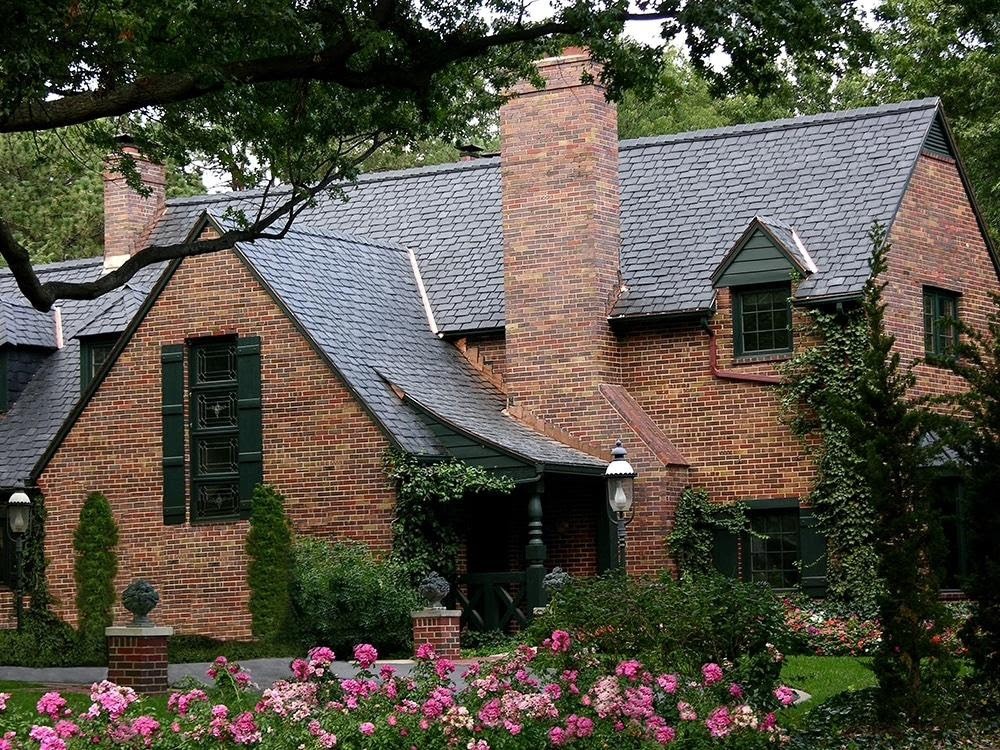
Unlike traditional asphalt shingles, which are built from a fiberglass mat coated in petroleum-based asphalt and topped with ceramic granules, synthetic roofing shingles are manufactured from engineered polymers — essentially commercial-grade plastics with enhanced UV resistance and impact strength.
The leading synthetic product on the market, F-Wave's REVIA line, uses a patented single-piece compression molding process. There are no layers to delaminate, no granules to shed, and no asphalt to dry out and crack. The shingle is a single solid piece of material from front to back.
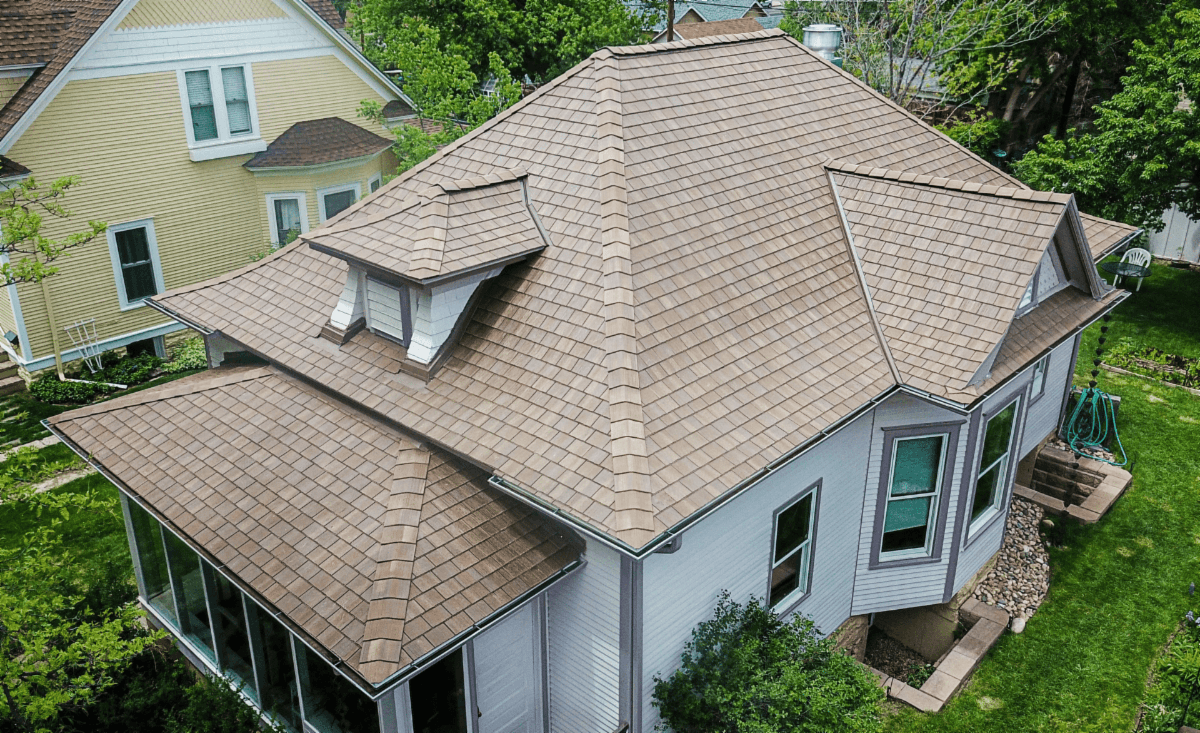
Synthetic shingles are designed to replicate the look of traditional materials — slate, cedar shake, or architectural asphalt — while eliminating the maintenance issues and failure points those materials are known for. They carry a Class A fire rating (the highest available), wind resistance up to 130 mph, and a Class 4 impact resistance rating under the UL 2218 standard.
That last spec — Class 4 impact resistance — is the one that matters most in North Texas.
Why Does Hail Resistance Matter So Much in Dallas–Fort Worth?
North Texas sits squarely in what meteorologists call "Hail Alley," a corridor stretching from central Texas up through the Great Plains where warm Gulf moisture collides with cold fronts to produce some of the most severe convective storms in the country.
The data backs up what every DFW homeowner already knows from experience. Texas led the nation with 878 hail events in 2024, according to the Insurance Council of Texas. In 2023, hail of at least one inch in diameter struck more than 2 million Texas homes, and the DFW area was hit especially hard — storms in Dallas–Fort Worth during June 2023 alone caused an estimated $7 billion to $10 billion in insured losses, with 95 percent of that damage caused by hail, per data from the Texas Casualty Insurance Association.
The pattern continued into 2025. A powerful hailstorm struck the Metroplex on June 1, 2025, dropping hailstones up to 3 inches in diameter across Tarrant County, Plano, Rockwall, and McKinney. Earlier that spring, the National Weather Service Fort Worth office received nearly 50 hail reports from storms on March 25–26, with hail up to 2 inches in Allen and 1.75 inches in Dallas.
This is the environment your roof lives in. A standard asphalt shingle has an expected lifespan of 15 to 25 years under normal conditions — but in the DFW hail corridor, many roofs don't make it past 10 years before needing a full replacement. That accelerated replacement cycle is the core problem synthetic roofing is designed to solve.
How Does Synthetic Roofing Actually Perform Against Hail?
Class 4 is the highest impact resistance classification under UL 2218, the standardized test developed by Underwriters Laboratories specifically for roofing materials. The test involves dropping a 2-inch steel ball from 20 feet onto the shingle surface — twice in the same spot. To earn a Class 4 rating, the material must show no cracking, splitting, or fracturing.
Asphalt shingles can earn Class 4 ratings too, typically through SBS polymer modification that adds flexibility. But there's a critical difference: asphalt Class 4 shingles still rely on surface granules and layered construction, which means they degrade over time and lose impact resistance as they age. A 10-year-old "Class 4" asphalt shingle doesn't perform the same as the day it was installed.
Synthetic shingles don't have that degradation curve. The impact resistance is inherent to the material itself, not a coating or additive. F-Wave backs this with an exclusive 5-year manufacturer's hail guarantee against damage from hailstones up to 2 inches — covering both materials and labor. That type of hail-specific warranty doesn't exist in the asphalt shingle category.
For property owners weighing their options for residential synthetic roofing or commercial synthetic roofing, this durability difference is the primary reason the product category exists.
What Are the Real Costs of Synthetic vs. Asphalt Roofing?
Synthetic shingles cost more upfront — there's no way around it. Material costs typically run $8 to $12 per square foot compared to $4 to $6 for standard asphalt. With professional installation, total project costs for a synthetic roof generally fall in the $12 to $25 per square foot range depending on roof size, pitch, complexity, and your location within the Metroplex.
But upfront cost alone is the wrong way to evaluate a roof in North Texas. The real comparison is total cost of ownership over time.
An asphalt roof installed in 2026 will likely need replacement somewhere around 2041 to 2046 — and possibly sooner if a major hail event hits. That second roof will cost substantially more than the first due to material inflation. The cost of asphalt shingles has already climbed roughly 40 percent over the past five years, according to Texas Casualty Insurance Association data, and there's no indication that trend is slowing.
A synthetic roof installed in 2026 is designed to be the last roof you install, with an expected lifespan of 50 years or more. Over a comparable timeframe, an asphalt roof owner could cycle through two or three full replacements — each one more expensive than the last.
Then layer in insurance savings (covered in the next section), avoided deductibles from claims you never have to file, and the near-zero maintenance requirements of synthetic, and the lifetime cost picture shifts dramatically in synthetic's favor.
How Much Can You Save on Insurance with a Synthetic Roof in Texas?
Texas was the first state in the country to mandate that insurance companies offer premium discounts for impact-resistant roofing, beginning in 1998 under Texas Department of Insurance guidelines. The discount structure is tied to the UL 2218 classification of the roofing material and the hail frequency in your geographic area.
For a Class 4 rated roof in a high-hail zone like much of Dallas–Fort Worth, premium discounts typically range from 15 to 35 percent annually, according to industry data and TDI guidelines. The exact percentage depends on your specific insurer, your policy structure, and your county's hail history.
There's also a less obvious savings layer. Insurance deductibles for roof claims in Texas have risen steeply — 2 percent of insured home value is now standard, and policies with $5,000 to $10,000 deductibles are increasingly common in hail-prone areas. Each time you file a hail claim, you're paying that deductible out of pocket and adding a claim to your history, which can drive premiums even higher or lead to non-renewal. The number of non-renewal complaints in Texas more than doubled in 2024, according to Texas Department of Insurance data, with many homeowners receiving notices citing "high wind and hail exposure" even without prior claims.
A synthetic roof that doesn't sustain damage in the first place breaks that cycle. Fewer claims, lower deductibles paid, and a cleaner insurance history over time.
How Can I Finance a Synthetic Roof?
The higher upfront cost is the most common barrier to choosing synthetic — but it doesn't have to be. Several approaches can make the investment manageable.
Roofing financing. Many roofing companies, including those that finance roofing projects directly, offer payment plans that spread the cost into monthly installments. This lets you lock in the long-term savings of synthetic roofing without needing the full amount upfront. When you factor in reduced insurance premiums and eliminated replacement costs, the monthly net cost of a financed synthetic roof can actually come in below the combined cost of an asphalt roof plus higher insurance.
Insurance claim proceeds. If your current roof has been damaged by hail or wind, your insurance payout for the roof replacement can be applied toward the cost of a synthetic upgrade. You'll typically pay the difference between the insurance settlement and the synthetic roof price, which financing can cover.
Long-term ROI framing. For commercial property owners evaluating commercial synthetic roofing, the investment math is often even more favorable. Larger roof areas mean larger insurance savings, fewer disruptions to business operations from repair work, and the ability to amortize the cost over the building's useful life.
The key question isn't really whether you can afford a synthetic roof — it's whether you can afford another 15-year cycle of asphalt replacements, rising premiums, and hail-related deductibles.
Does Synthetic Roofing Work for Commercial Buildings in North Texas?
Commercial properties face the same hail exposure as residential — often at a larger scale and with greater financial consequences. A single major hailstorm can mean tens of thousands in damage, lost rental income during roof repairs, tenant disruption, and increased insurance costs across an entire portfolio.
Synthetic roofing products carry the same performance specs regardless of application: Class 4 impact resistance, 130 mph wind rating, Class A fire rating, and 50-year expected lifespan. For commercial property managers and owners across DFW, the practical benefits are significant. No granule loss means no clogged gutters or drainage issues. No curling or cracking means no leak risk from aged materials. No algae growth means the building maintains its appearance without chemical treatments or pressure washing.
The insurance premium reductions available for Class 4 rated roofs apply to commercial policies as well, and on larger properties, those percentage savings translate to substantially larger dollar amounts annually.
What Should You Know Before Choosing a Synthetic Roofing Contractor?
Synthetic shingles install using standard roofing practices — nail guns, starter strips, hip and ridge caps — so any experienced roofing crew can handle the physical installation. But there are details that matter for warranty compliance and insurance qualification.
Your contractor needs to complete the TDI form PC068 (Impact-Resistant Roofing Installation Form), which documents the product installed, its UL 2218 classification, and the installation details. This is the form your insurance carrier needs to apply your Class 4 discount. Without it, you may not receive the premium reduction you're paying for.
The contractor should also register your manufacturer warranty, confirm that matching hip and ridge products are Class 4 rated (some insurers require this), and ensure proper ventilation — synthetic shingles have different thermal characteristics than asphalt, and ventilation needs should be evaluated accordingly.
For residential synthetic roofing or commercial synthetic roofing projects in the Dallas–Fort Worth area, working with a contractor who has specific synthetic installation experience — not just general roofing experience — matters.
Is 2026 the Right Time to Switch to Synthetic in DFW?
Storm season in North Texas typically ramps up in March and runs through June, with the heaviest hail activity concentrated in April and May. If your current roof is aging, has existing hail damage, or is due for replacement, the window before storm season is the ideal time to make the switch.
Several factors make 2026 particularly relevant. Insurance carriers continue to tighten underwriting in hail-prone regions of Texas, with premium increases and coverage restrictions putting additional financial pressure on property owners with traditional roofing. Asphalt material costs remain elevated. And the synthetic roofing product category has matured — products like F-Wave REVIA are now backed by years of real-world performance data across North Texas, and other severe weather states.
For homeowners and business owners across Dallas, Fort Worth, Arlington, Plano, McKinney, and the broader North Texas area, synthetic roofing represents a genuine shift in how we think about the roof over our heads: not as a recurring expense that gets demolished by hail every decade, but as a long-term asset that protects your property and your finances for the next half century.
If you're evaluating your options, Arrington Roofing can walk you through the specifics for your property — including what your insurance savings would look like, what financing options are available, and whether synthetic is the right fit for your roof replacement.
Arrington Roofing serves residential and commercial property owners across North Texas, including Dallas, Fort Worth, Arlington, Plano, McKinney, and the greater DFW Metroplex. Learn more about residential synthetic roofing, commercial synthetic roofing, roof replacement, and roofing financing at arringtonroofing.com.